COVID-19 Pandemic: Why Patients Need to Control Their Own Health Data

Mar 24, 2020 | Insights

We’re in the throes of a global pandemic. Healthcare providers must focus on fighting COVID-19, but we can’t afford to ignore the reason we’re going into this fight blind. Our best weapon is our own healthcare data. We are going to learn many things from this pandemic, not least of which is that the way we thought about data ownership over the previous decade needs to change.

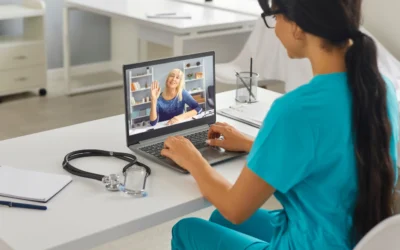
Pandemics represent a system-wide attack on healthcare. Our best responses rely on social distancing, telemedicine, and the ability to measure the spread of the disease. All of these functions are powered by patient data. But if patients can’t easily share that data with healthcare providers, it has little value in the fight against COVID-19.

But this isn’t just about using telemedicine to fight COVID-19 directly by asking symptomatic patients to first video-conference with their doctors before coming for an in-person exam. Telemedicine also plays a critical role more broadly. Flattening the curve places an enormous burden on the entire healthcare system—from dental and vision, to mental health, and everything in between because it forces us to deprioritize nonessential functions.

Our ability to expand emergency healthcare capacity depends on the extent to which healthcare providers can serve patients remotely. That’s an enormous task in a nation where, according to CDC data, six out of every ten Americans have a chronic medical conditions, and four out of ten Americans have two chronic conditions.

What, you might ask, is the problem with scaling telemedicine during the current crisis? After all, we have the technology, right? That’s true we do have a lot of tools for remote provider-patient communications as well as the ability to transmit vital healthcare data. What’s missing is good public policy around patient data. Put simply, we don’t own our own healthcare data, which means the information providers need to keep us healthy is both heavily siloed and difficult for patients to disseminate.

In response to the pandemic, the federal government loosened HIPAA rules, allowing doctors to communicate with their patients over consumer platforms like Facebook messenger, or video-conferencing solutions like Zoom. That’s a good step, one that follows on the heels of a new rule issued in early March (unrelated to the pandemic response) that allows patients to access and download their health records with third-party apps.

Here’s how National Coordinator for Health IT Doctor Donald Rucker explained the new health records rule: “This is an unprecedented rule allowing the safe and secure access of health information. Americans will now have electronic access to their health information on their smartphone if they chose. The rule requires hospitals and doctors to provide software access points to their electronic health record (EHR) databases.”

Easy COVID-19 tracking for your business.


But smartphones have been around for more than a decade. For most Americans, regardless of age, their smartphone has been an indispensable tool for many years now. Why did it take so long to put our health data at our fingertips?

One reason is consumers don’t control their own data in the U.S. Broadly speaking, the apps, platforms, and tools that make up our digital economy adhere to a default rule that puts the data under control of the company, rather than the consumer. To a degree, healthcare is part of this larger trend that creates data-haves and data have-nots. But this trend plays out in two ways that are unique to healthcare.

First, when it comes to healthcare, the stakes are literally life and death. The downside risks of ceding personal control of your data to a social media platform aren’t anywhere near the same as losing the ability to control your health data and easily share it with your provider.

Second, while many companies in the broader digital space have moved fast and broken things without regard for consumer privacy, healthcare has taken a different, perhaps more cynical, approach. Safeguarding patient’s privacy is a paramount concern. But privacy concerns haven’t necessarily been the prime motivation for healthcare administrators who fought against rules that would make it easier for patient to own and share their data. What has happened here is that the data-haves of the healthcare industry have hoarded data that doesn’t belong to them, and in the process, they’ve built siloes that make it difficult to deliver quality care in normal times, and harder still to do so in response to a national emergency. That needs to stop.

There’s an old saying that every crisis has an opportunity. We are in a crisis. We’re also facing an opportunity to embrace a patient-centric model for data ownership. Healthcare providers should vigorously embrace the new rules governing patient data, but going forward they must also challenge the data-hoarding mindset that has dominated medicine in the digital age. Our health is just too important to be a data-mining play.

Click here for the full article from HIT Consulting.

Register here for free access to the Calcium app and COVID-19 Symptom Tracker

Are you an employer? Check out our COVID-19 App for Employers.

Easy COVID-19 tracking for your business.


Calcium

Calcium believes a healthier world starts with healthier decisions. From its founding in 2018, Calcium has been focused on providing individuals with access to meaningful health data right at their fingertips, by employing easy, fun-to-use tools and personalized guidance that make healthier decisions easier. The company is purpose-built to improve health outcomes and patient satisfaction with an intuitive platform that provides real-time insights and trend analyses to give a more complete picture of an individual’s health. Calcium is dedicated to helping individuals “think healthier.” To learn more about Calcium, visit www.calciumhealth.com.

AI-Powered Pathways

Create and assign treatment-specific pathways for individual patients or frequent groups — that your patients can then follow on their mobile phone or PC.

360-Degree Views

Integrate and analyze patient data from EHRs, lab results, health apps, wearables, digital health gear and remote patient monitoring (RPM) medical devices.

Health Super App

Improve patient engagement and compliance with a patient-centered app that guides, educates and motivates your patients to achieve their health goals.

Better Health Outcomes

Leverage the power of automation and AI to provide your patients with continuous guidance, automated support and access to helpful health tools.

Explore How Calcium Powers Modern Perioperative Medicine

Calcium is built for perioperative teams that are ready to move beyond manual coordination and fragmented tools and operate with greater clarity, consistency, and confidence across the surgical episode.

If your perioperative program is focused on improving readiness, reducing risk, and driving measurable surgical outcomes, Calcium provides the digital foundation to support that work at scale.

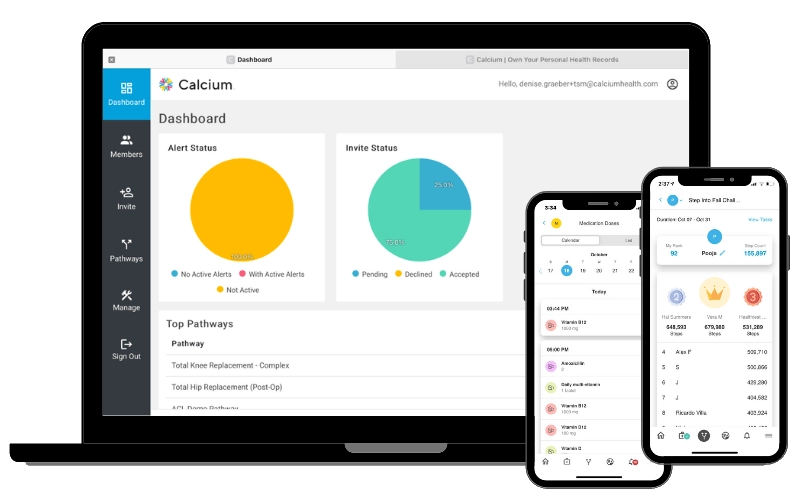
Calcium digital health platform - dashboard and app

Free E-Book

Orthopedics and Digital Health: A Synergistic Approach

Related Posts

Online casinos with low minimum deposit

elitedigitalcasinos ≡ Coupons Casino Sign In Guide Online casinos with low minimum depositThis article breaks down online casinos with low minimum deposit in Australia. We explain who benefits from them, what to expect, and who could skip them. You'll get a clear...

read more
Using EHR Patient Data to Create Tailored Treatment Pathways

Using EHR Patient Data to Create Tailored Treatment Pathways

Transforming Information Overload Into Streamlined, Patient-Centered Care Healthcare data is exploding—but can your practice actually use it to your advantage? In today’s value-driven care environment, data isn’t just about compliance or recordkeeping anymore. It’s...

read more
Why Mobile-First is the Future of Value-Based Care

Why Mobile-First is the Future of Value-Based Care

Reimagining Patient Connections and Clinical Insight Through Everyday Technology Healthcare is changing fast and mobile is leading the charge. As value-based care (VBC) becomes the new standard, providers are expected to deliver better outcomes, reduce costs and...

read more

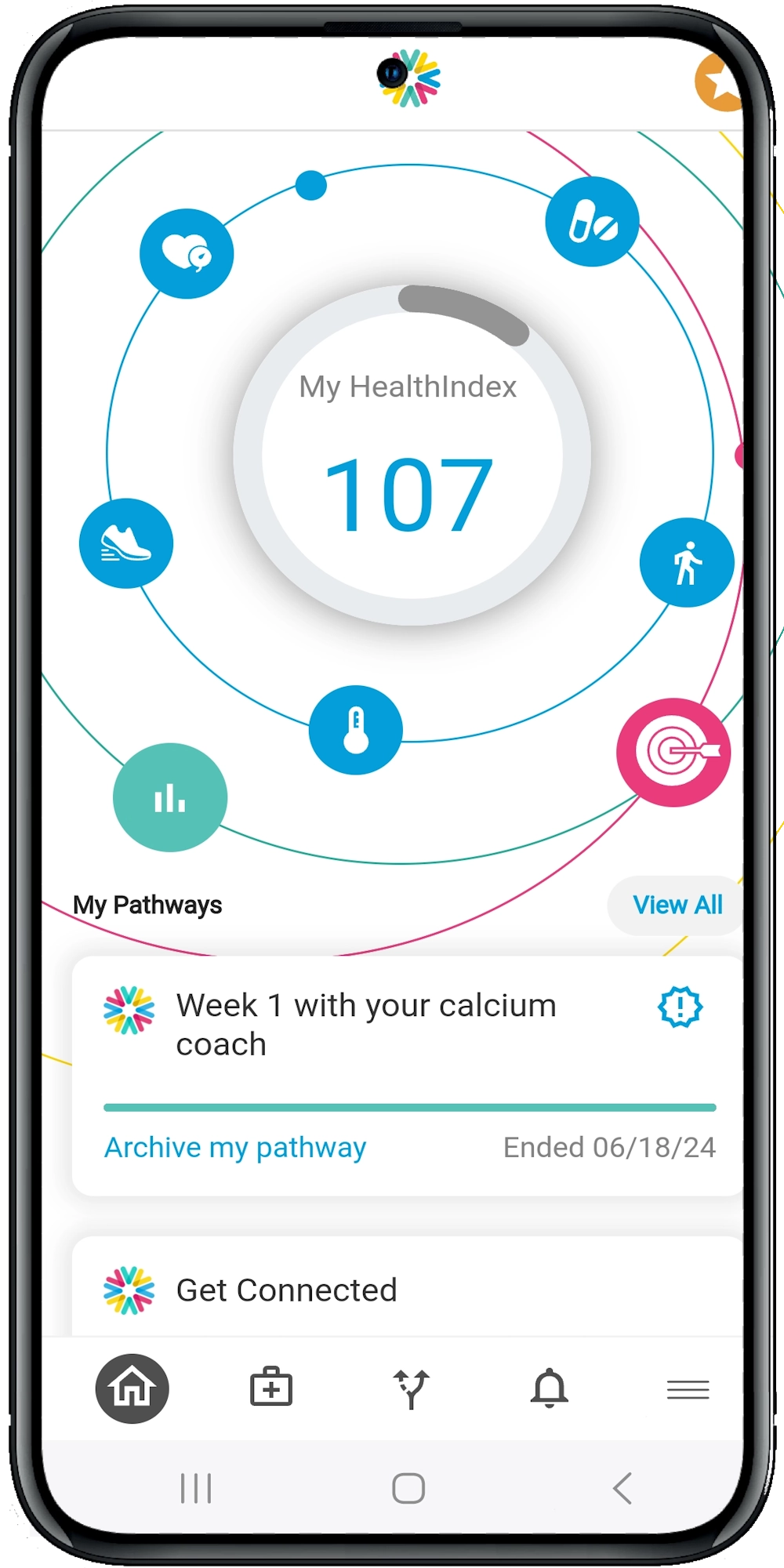
Health Super App

Access powerful health tools and resources to help you take control of your health and reach your health and fitness goals.

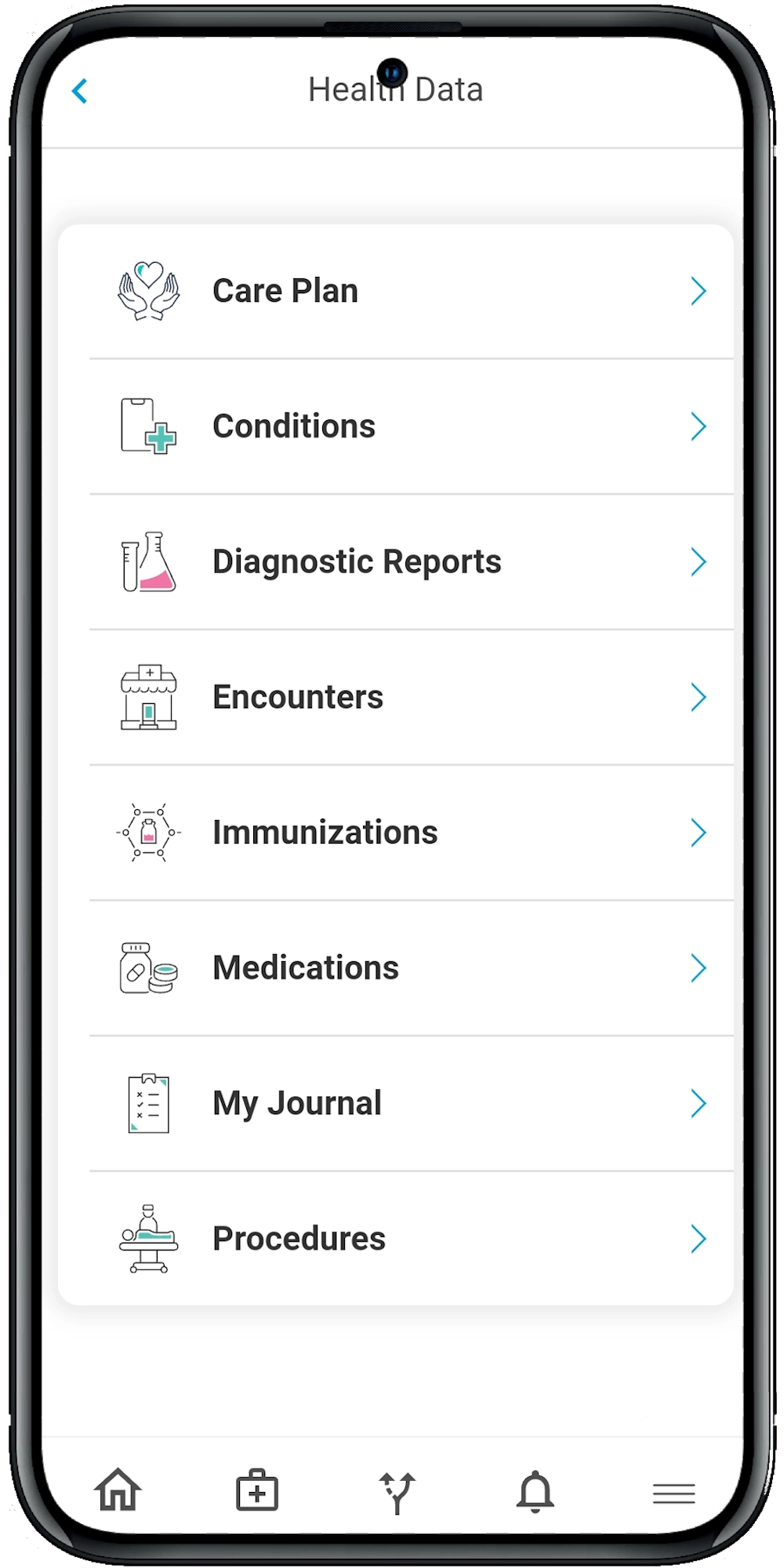
Electronic Health Records

Access, organize and securely share your electronic health records (EHR), including lab results, prescribed medications and treatment plans.

Device Data Integration

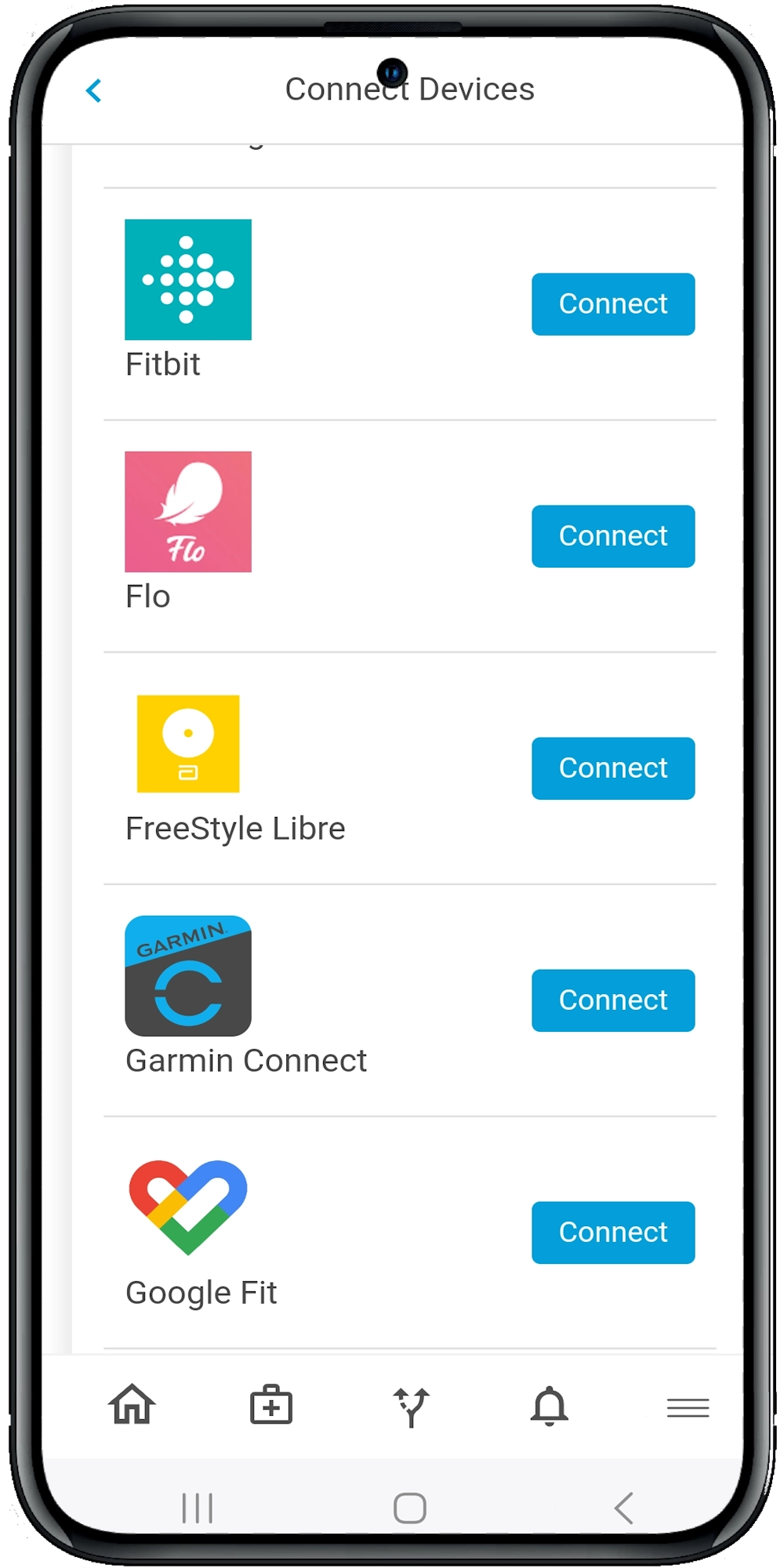
Integrate your health and fitness data from hundreds of health apps, wearables and monitoring devices then share with your circle of care.

AI-Powered Pathways

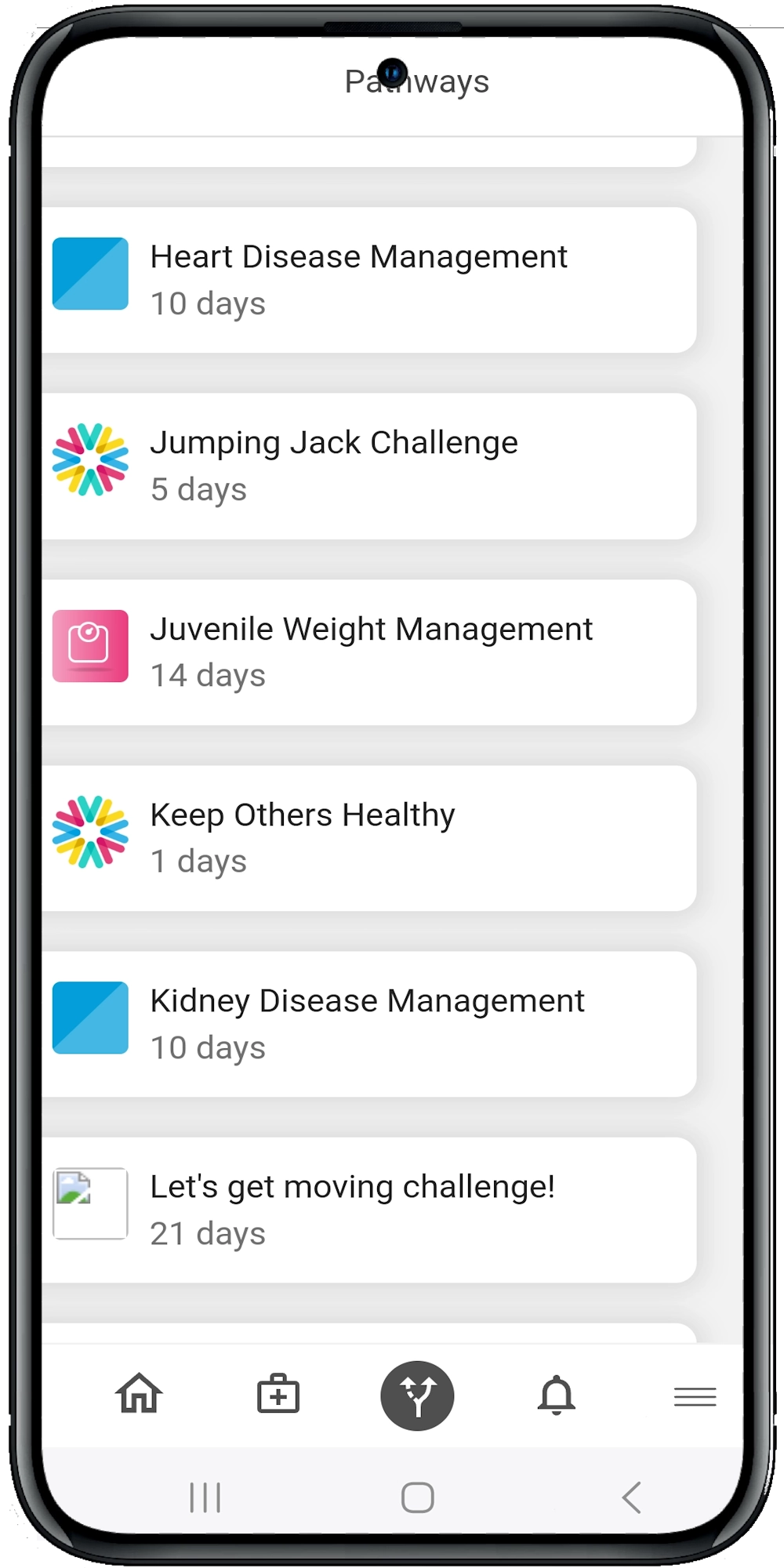
Take advantage of our professionally designed pathways to guide you to better health and optimal fitness.

While looking for new slot experiences, rouge casino often appears in conversations about trusted gaming sites. Many users focus on the selection of slots, welcome bonuses, and smooth mobile gameplay before deciding where to play. For many players, finding the right balance between bonuses and game variety is essential.

When comparing modern gambling platforms, https://casino-magicwin.com/ often appears in conversations about trusted gaming sites. Many users focus on the selection of slots, welcome bonuses, and smooth mobile gameplay before deciding where to play. Because of that, experienced players tend to compare several platforms before choosing their favourite.

Among fans of online slots and table games, https://7goldcasino-gb.com/ is frequently mentioned by players comparing bonuses and game libraries. Modern casino fans often compare promotions, slot providers, and overall site usability. For many players, finding the right balance between bonuses and game variety is essential.

When reviewing popular casino websites, https://fortunica-gb.org/ often appears in conversations about trusted gaming sites. Many users focus on the selection of slots, welcome bonuses, and smooth mobile gameplay before deciding where to play. This is why reviews and community discussions remain important for casino players.

When reviewing popular casino websites, winomania casino no deposit bonus is one of the names players notice when browsing casino options. Modern casino fans often compare promotions, slot providers, and overall site usability. This is why reviews and community discussions remain important for casino players.

For many gamblers checking different platforms, slotty slots can come up when users discuss modern gambling platforms. Modern casino fans often compare promotions, slot providers, and overall site usability. Because of that, experienced players tend to compare several platforms before choosing their favourite.

When reviewing popular casino websites, https://purple-casino.com/ is frequently mentioned by players comparing bonuses and game libraries. Players usually pay attention to bonus terms, payment speed, and the variety of games available. This is why reviews and community discussions remain important for casino players.

Among players exploring online casinos, https://casinojoy-gb.com often appears in conversations about trusted gaming sites. Modern casino fans often compare promotions, slot providers, and overall site usability. For many players, finding the right balance between bonuses and game variety is essential.

treatment-diabetes-info.com